


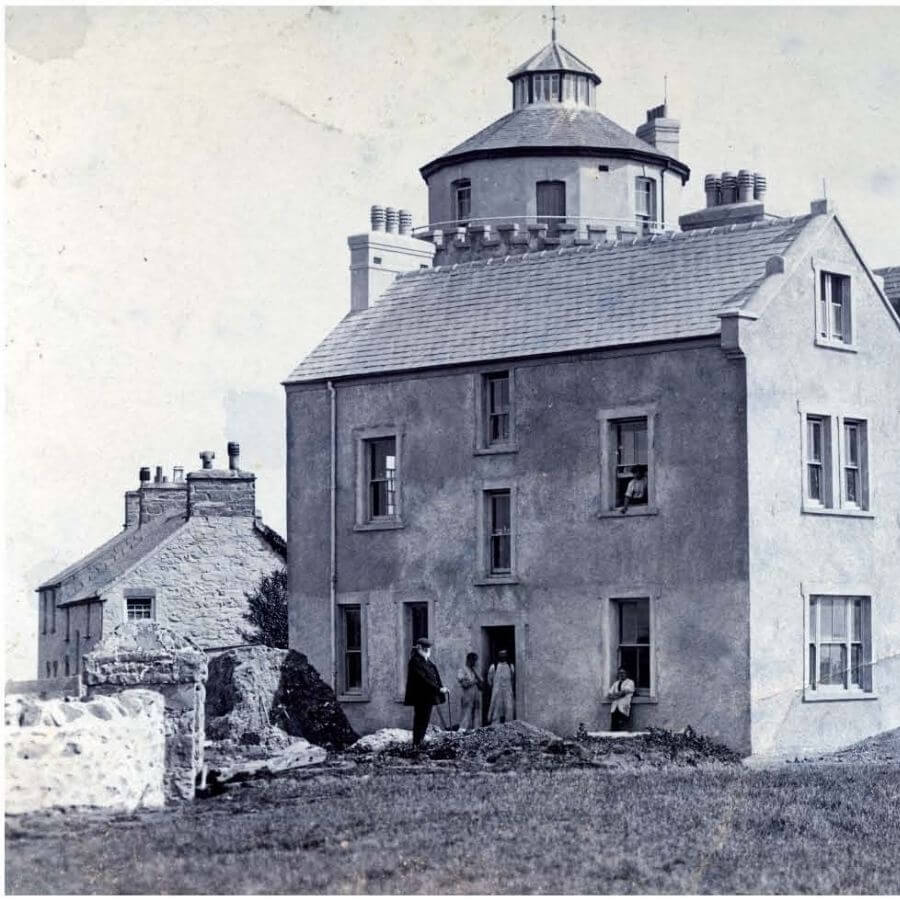
Excerpt from the Twr y Felin History and Guide to St Davids
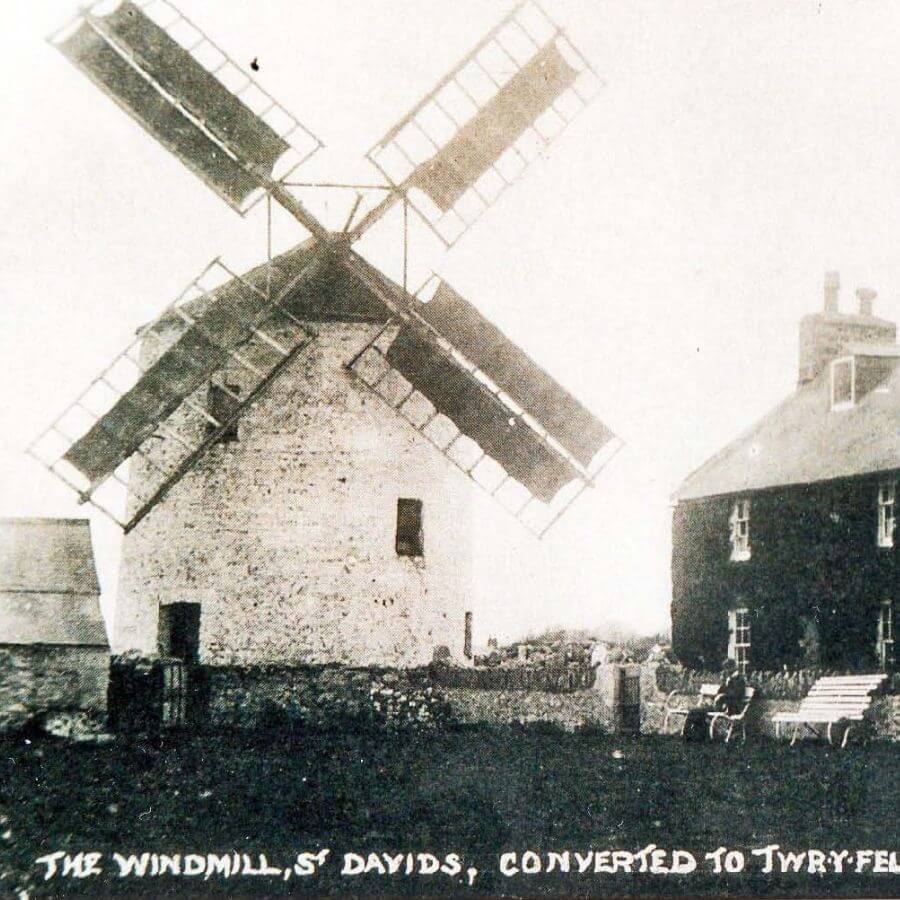
“The windmill at St Davids was erected in the year 1806, by an old resident, George Llewellyn of “Foxhole,” Tygwyn (on the shores of Whitesands Bay), assisted by his two sons, John and Henry, who were carpenters. Of the father, who was known to have, in his time, done wrecking extensively, it was said: “He got his money on the water, and invested it on the wind.”
The windmill, as erected by “Shors” Llewellyn, was comparatively frail and lacking in the strength necessary to withstand the terrible N.W. storms, the result being that accidents were not only frequent but the damage done was often very considerable. At last, a storm of unusual violence upset the whole roof, wings and sails into the adjoining field. This so daunted the young brothers that they died premature deaths of disappointment.
Whilst in this condition, the mill was bought by Mr George Williams, of “The Old Shop,” a pious and much respected merchant, many of whose descendants still reside within the city. A new and stronger top and wings having been built, after a little time, the “music of the mill” was renewed. It is said of Mr Williams that he never neglected family worship either morning or evening. One evening, however, whilst entertaining two preachers “from the north,” conversation having continued to a late hour in the night, family worship upon this occasion was dispensed with. During the night, a terrific storm arose, and when dawn broke, it was found that the old windmill roof, wings and all, had been blown completely over into the field as before. This, the pious old gentleman ever after attributed to his neglect of family worship. The windmill, having now become a valuable asset to the district, the whole of the citizens and parishioners requested and even petitioned Mr Williams to undertake its repair, which he was eventually persuaded to do.
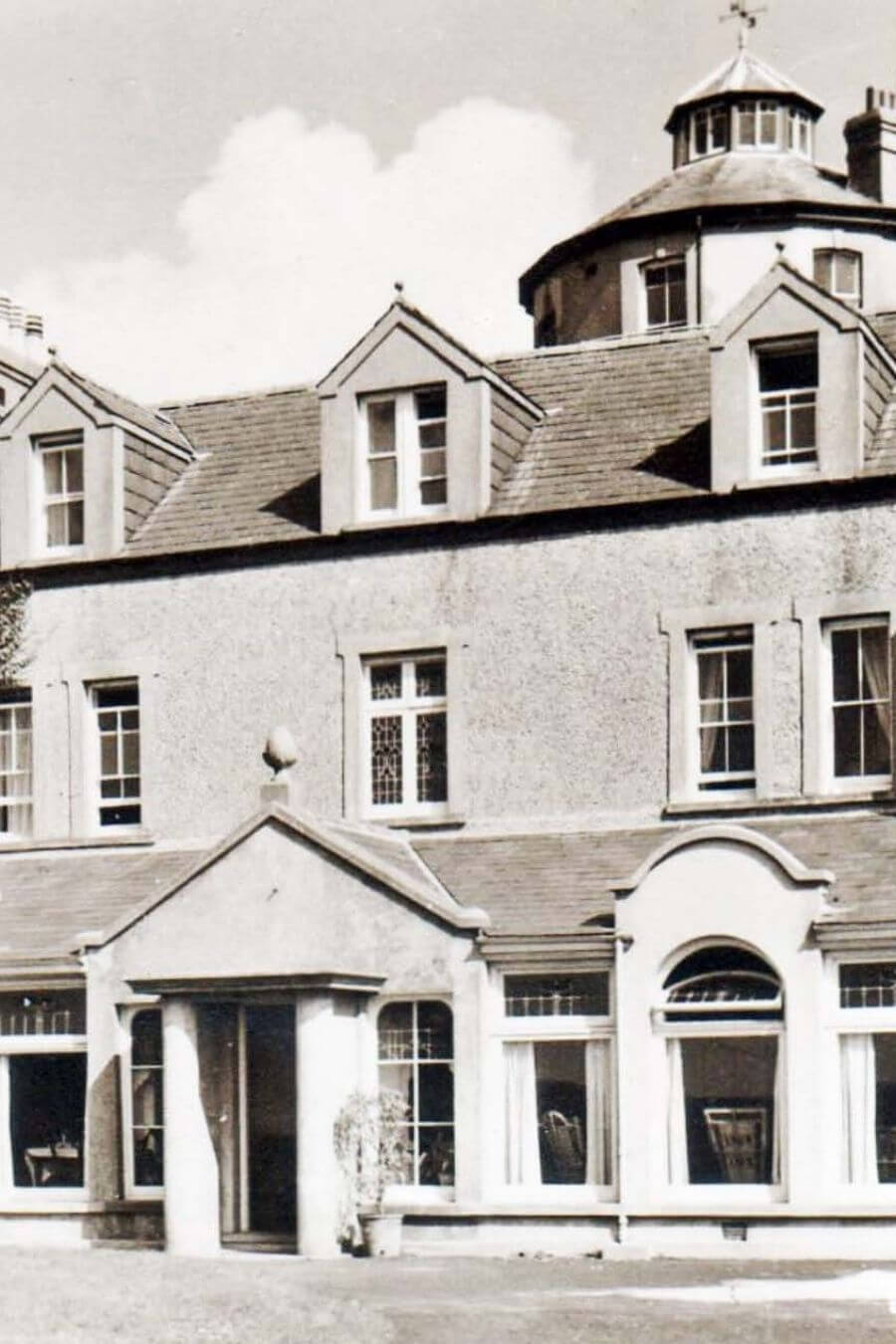
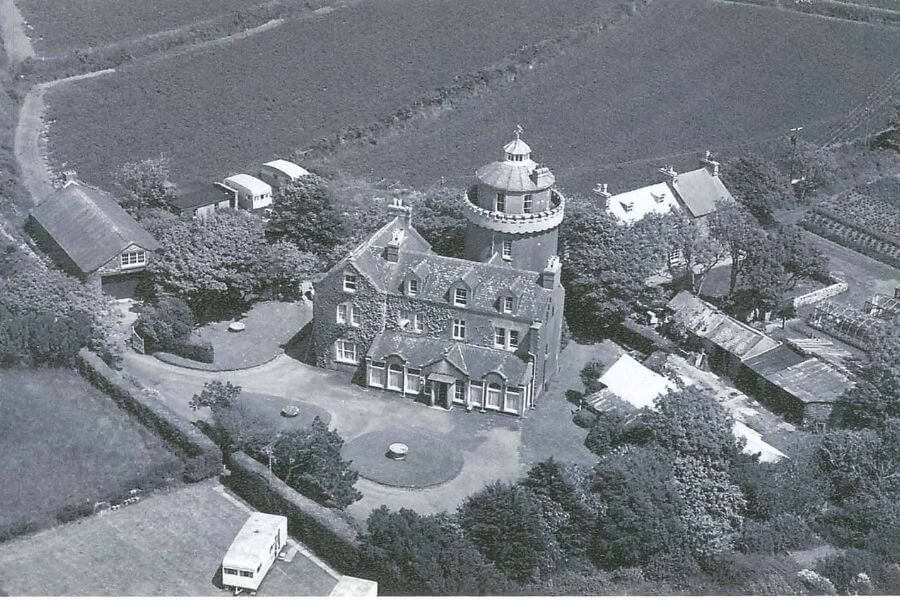
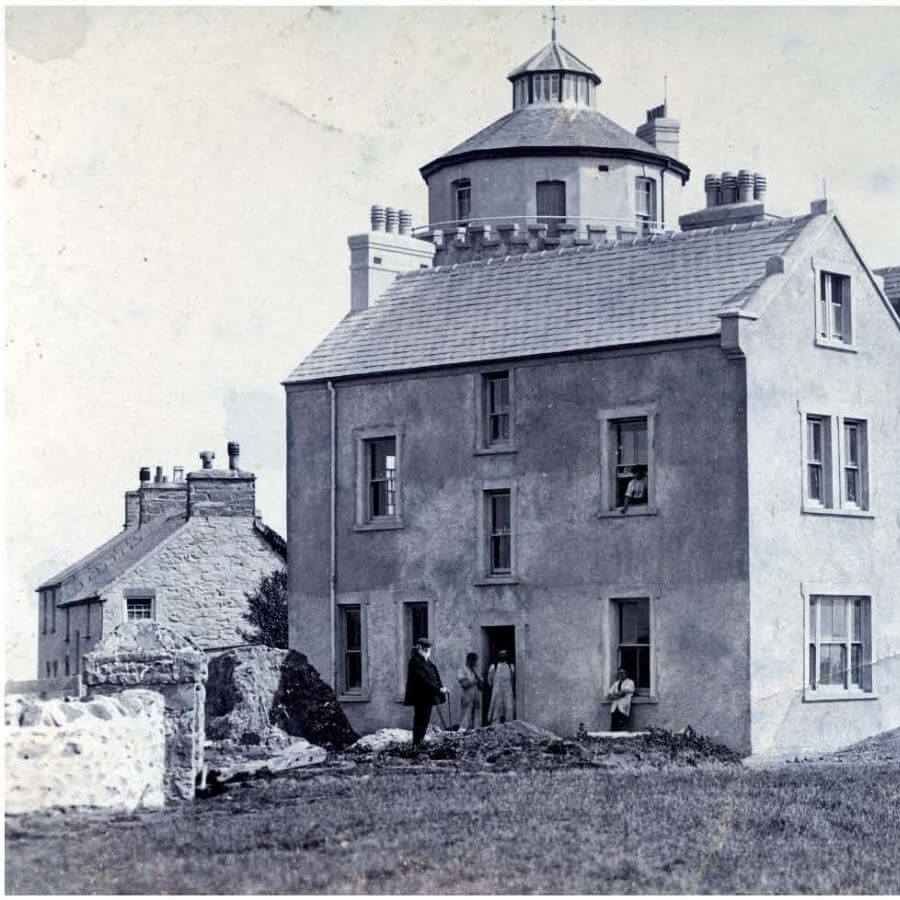
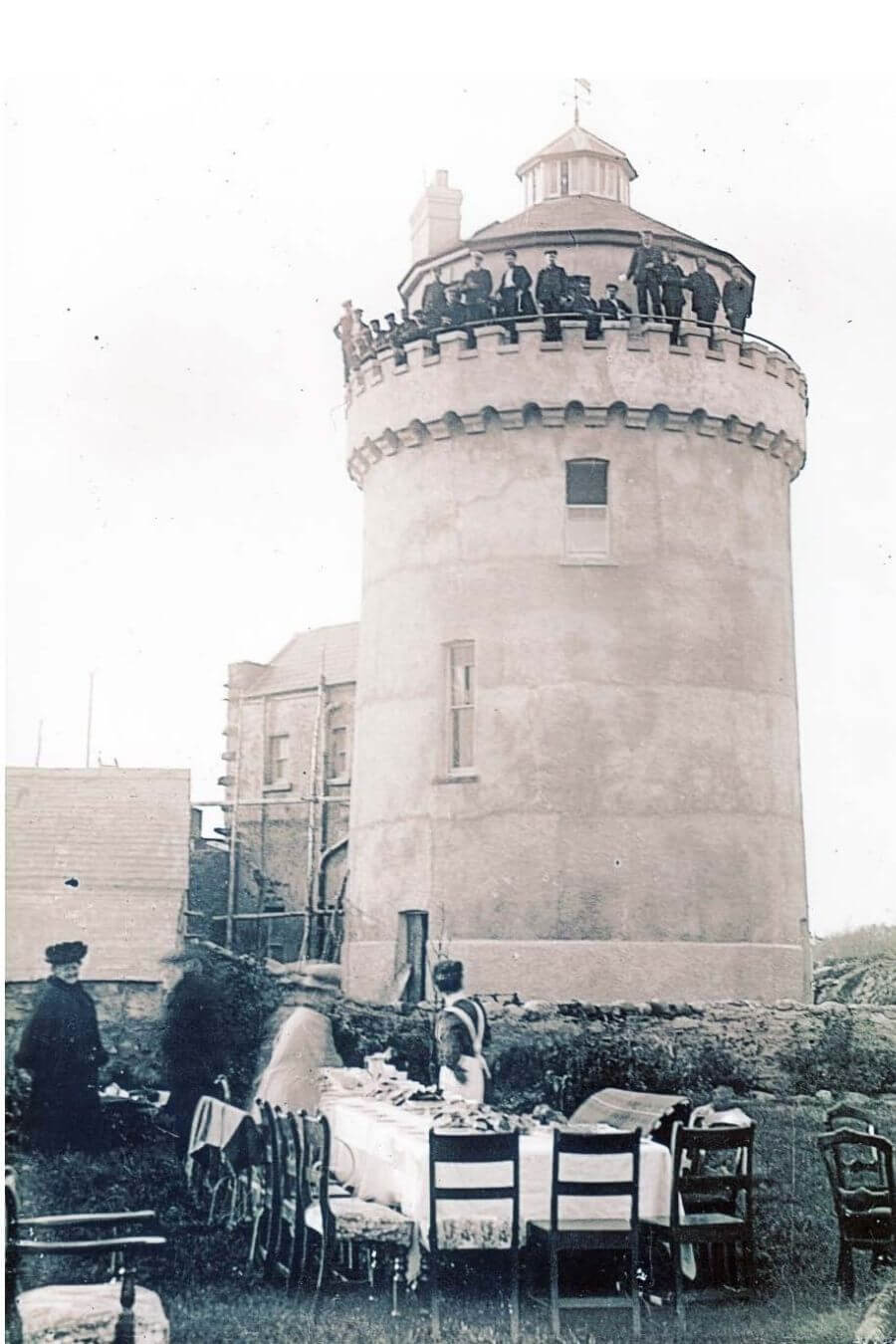
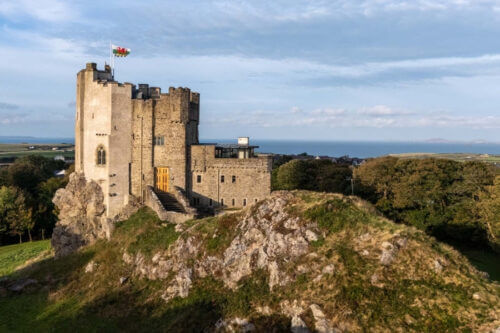
Passing through the hands of his son-in-law, Mr Tommy Williams, of Mount Pleasant, who undertook its care and management for some years, in the year 1866, David Evans of Triago Farm bought and renovated the structure using materials from a timely shipwreck. The mill continued to grind corn from 1862 right through to 1904, when the sails were dismantled. David Evans’s youngest son, Evan Evans, raised the height of the tower in 1907 when he was 21 years old. He converted the tower and erected new buildings alongside to create a new hotel called Twr-y-Felin, the Welsh for ‘mill tower’.
Evan had been trained as a builder-architect in Cardiff and had been a staff sergeant with the Royal Engineers, surviving the trenches of the Great War. He went on to construct many significant buildings in the area, including the Masonic Hall in Fishguard, the City Hall in St Davids and many houses. Evan’s sister, Elizabeth, ran the hotel as a successful and well known temperance hotel until it was requisitioned by the Government for the war effort in 1939.
Evacuees from the London Blitz stayed there in 1940, following which the Admiralty stationed the Women’s Royal Naval Service, “Wrens”, in the building until 1945. The following is an excerpt from a Wren’s account of life there in 1943 (Daily Telegraph 8 Apr 2009)
“I was sent to St David’s Head in Pembrokeshire (HMS Skirmisher). Our Wrennery was a converted sort of lighthouse with a circular room at the top, windows all around; this was our watchroom. Nobody outside the 12 of us plus our third Officer was allowed entry, nor did anyone know what we were doing there. Two girls kept constant naval watches there, a W/T (Morse) operator and an R/T (German speech) operator searching endlessly in the wavebands on two VH/F sets each for German live signals. Once heard, these had to be rapidly logged (Callsigns, time of Origin, who called up whom, and any messages, etc), and if one, alone, considered the text important, one had to phone a telephone number on our set “I/C=Intelligence Centre” immediately. We also had to take it in turns to sleep in a wired-off hut in a nearby field where if necessary, one had to take a D/F (bearing) on any signal that was sent through to you from the watchroom”.
Following extensive repairs by the Admiralty after the War, the hotel was returned to Evan Evans, who leased it to his nephew, David Watts Evans, and his wife, Freda. Once again, the Twr y Felin Hotel became a successful temperance hotel. It was so successful that David and Freda would host up to 80 guests throughout the private houses of St Davids. Mealtimes would be run in relays to cope with the large number of guests. The hotel provided a valuable service during this period when accommodation in St Davids after the war was practically non-existent, and the tourist and holiday industry was rapidly expanding.